

Linking Scientific Disciplines
Who we are
The Academy of Sciences and Humanities in Hamburg unites top researchers from northern Germany. Our members and Young Academy Fellows, coming from all academic disciplines, are committed to interdisciplinary basic research as well as inquiry into topics with high societal relevance. Our network is further strengthened by Corresponding Members who contribute with additional expertise. The Academy’s work provides impetus that stimulates research far beyond the scientific community of northern Germany. As part of the general Academies’ Programme in Germany, the Academy in Hamburg in cooperation with the University of Hamburg is currently hosting eight Long-term research projects in the humanities and cultural sciences. These projects conduct basic research with the goal of making cultural heritage accessible in sustainable ways.
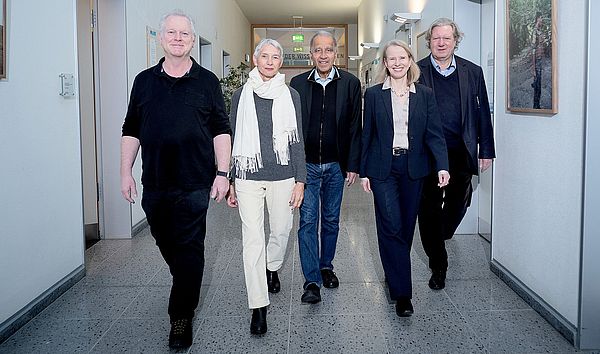
The academy comprises up to hundred Regular Members who are elected on the basis of outstanding academic merits. In addition, the academy encompasses Retired Members relieved of their duties, Honorary Members as well as Corresponding Members from Germany and abroad. New membership proposals must be supported by at least three Regular Members or by the Executive Board and undergo expert peer-review before being decided by the General Assembly of the Academy.
The Academy is a public corporation based at Hamburg. In addition to Hamburg, it also engages members from academic institutions based in Bremen, Mecklenburg-Western Pomerania, and Schleswig-Holstein.
Our research
Interdisciplinary Working Groups
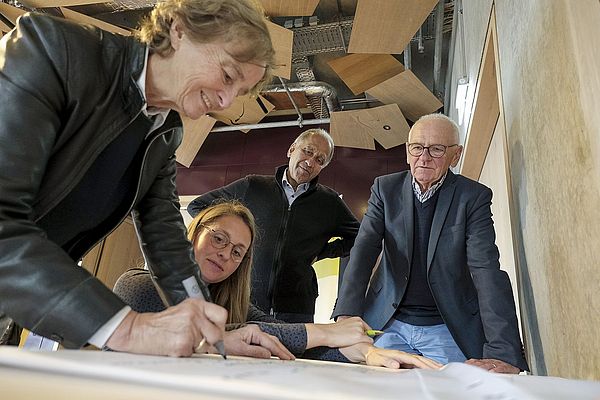
The core of the Academy's work is constituted by the activities of the scientific Working Groups and Project Groups, whose members come from a broad range of different disciplines. The groups work on fundamental scientific problems and on current topics of societal relevance. The Working Groups address for example topics of medical relevance, energy supply, concepts of justice in global contexts, and Coastal Protection. The outcomes of these projects are disseminated in digital and print formats, thesis papers and public events that provide new impulses and actively contribute to discussion with political and social stakeholders.
Long-term research projects
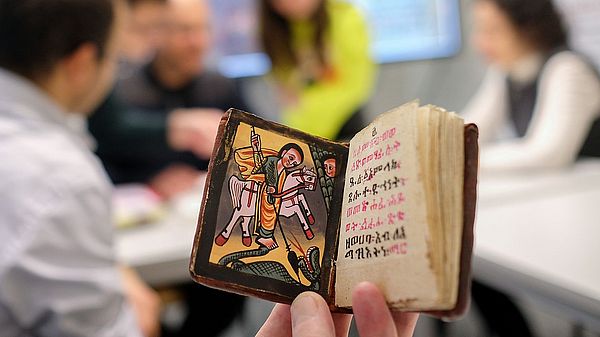
In cooperation with the University of Hamburg, the Academy is currently supervising eight Long-term academic projects of international significance as part of the general Academies’ Programme of Germany. These carry out basic research in the humanities. Over the course of the projects, which run between 12 and 25 years, the researchers are, for example, creating a digital dictionary of German Sign Language. Another project focuses on the topic of “Nazi Persecution and Music History”. In this way, all projects provide long-term digital knowledge repositories for the sciences and for society.
The Union of the German Academies of Sciences and Humanities coordinates the Long-term projects as part of the Academies' Programme, which is the largest research programme in the humanities and social sciences in the Federal Republic of Germany.
Network
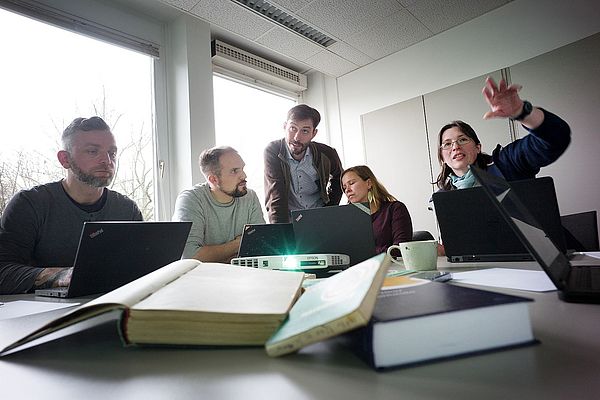
The Academy is connected to the research institutions of northern Germany through its members and fellows, but also through numerous event cooperations. It offers a forum for interdisciplinary dialogue and provides a platform for public discussions with representatives of various institutions and disciplines. By co-opting researchers affiliated to national and international research institutions as Corresponding Members, the Academy expands its research network and fosters worldwide cooperation.
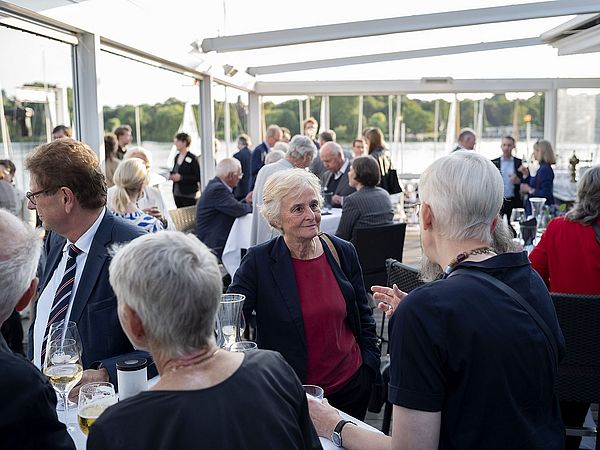
Cooperation with the three national academies of Estonia, Latvia and Lithuania prepares the ground for international exchange between the respective academy members and young researchers. Eventually, a joint network of scientists shall be established in order to facilitate intensive cooperation in research projects.
The Academy is one of the eight founding institutions of the Hamburg Institute for Advanced Study (HIAS).
Whom we support
Young researchers
The Academy supports outstanding young scientists from northern German research institutions in various ways.
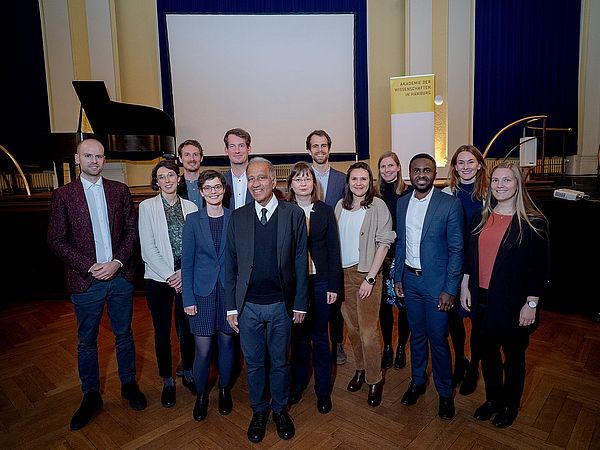
Young Academy Fellowships provide financial and ideational support to young researchers for three years. The fellows contribute to working groups and project groups, initiate research groups and organise academic events.
The Forum Junge Wissenschaft provides annual funding for the organisation of interdisciplinary scientific conferences, which are organised independently by young researchers.
The Academy regularly promotes young researchers from the Academy's northern German domain with the Joachim Jungius Prize and the Elise Reimarus Prize.
Hamburg Science Prize
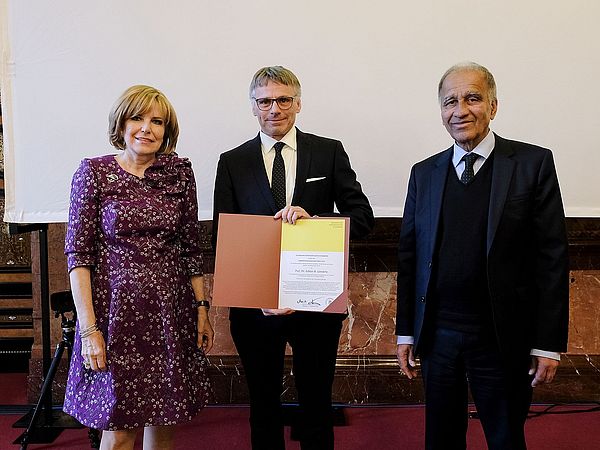
The Academy awards the Hamburg Science Prize every two years. This award is endowed with an amount of 150,000 EUR. The prize is donated by the Foundation „Hamburgische Stiftung für Wissenschaften, Entwicklung und Kultur Helmut und Hannelore Greve“. The Hamburg Science Prize supports research in areas of particular societal significance, such as energy efficiency, groundbreaking discoveries in physics, and issues of One Health.
What we offer
Events
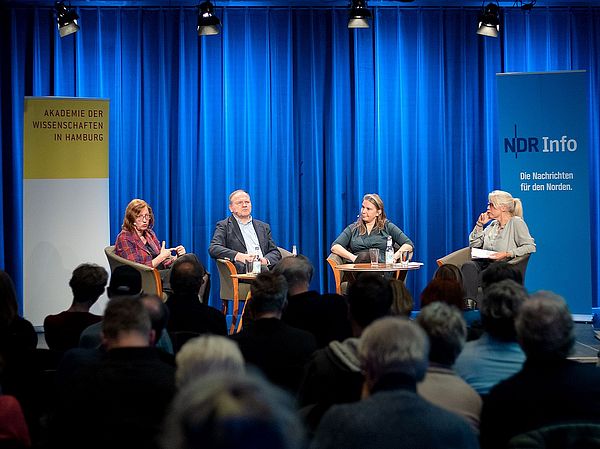
We offer free events for everyone. Panel discussions and lecture series provide insights into research work and scientific findings. Interaction with the audience plays an important role in this.
At the Parliamentary Breakfast, decision-makers from the worlds of politics and business learn more about research findings. The wide-ranging topics cover everything from climate research and artificial intelligence to questions of the international peace order. Through symposia and workshops, the Academy also actively promotes dialogue between researchers from different disciplines, research organisations and countries.
Scientific publications
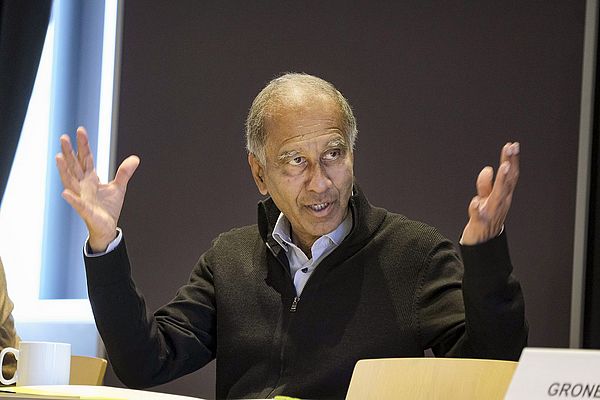
The Academy members contribute to knowledge transfer from science to society. The Academy promotes free access to scientific literature. Many book publications are being offered as complimentary e-books. On a regular basis, interdisciplinary collections of short essays on timely topics a published.
Sort essays are published regularly in essay series. In these essays, members and Young Academy Fellows explore an annual theme. In this way, the Academy’s interdisciplinary expertise, amongst other things, becomes visible.
Science communication
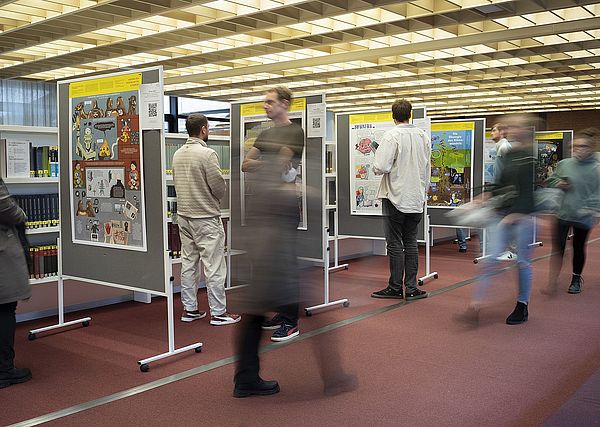
The science communication of the Academy offers orientation in fast-moving times. In addition to its website and publications, it also uses social media channels such as LinkedIn, Mastodon, Bluesky, Instagram and YouTube. For example, the website features an interactive, multimedia dossier on the role of hydrogen in the energy system of the future. An innovative exhibition on long-term research and science comics are breaking new ground in science communication.

The Academy podcast „Science as a compass“ („Wissenschaft als Kompass“) presents the Members, Young Academy Fellows and the work of the Academy in all its diversity. It can be accessed and subscribed free of charge on our website and numerous popular podcast platforms.
Digitalisation
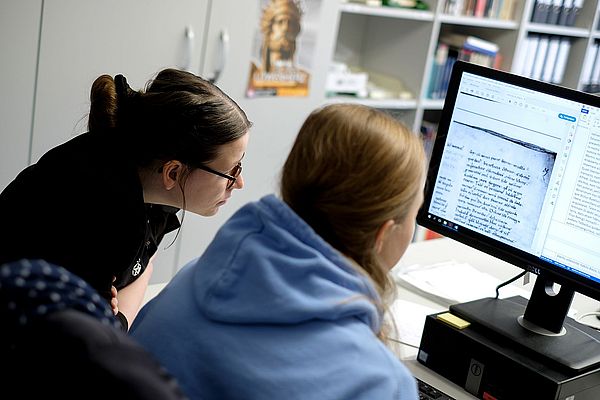
The Academy actively develops digital methods in the humanities. To this end, the Academy participates in the National Research Data Infrastructure (NFDI). In cooperation with other players in the field of digitalisation, the Academy is a driving force in shaping the digital future for research and society.

The Academy is a member of the Union of the German Academies of Sciences and Humanities, the association uniting eight
Academies of Sciences in Germany.
