
Exhibition content
- Greifswald: Key data on the exhibition "Necessary, useful, new – Long-term research in Hamburg"
- Past exhibitions
- What you will find here: about the landing page
- Overview long-term research projects
- Introduction NECESSARY, USEFUL, NEW – Long-term research in Hamburg
- Beta masaheft
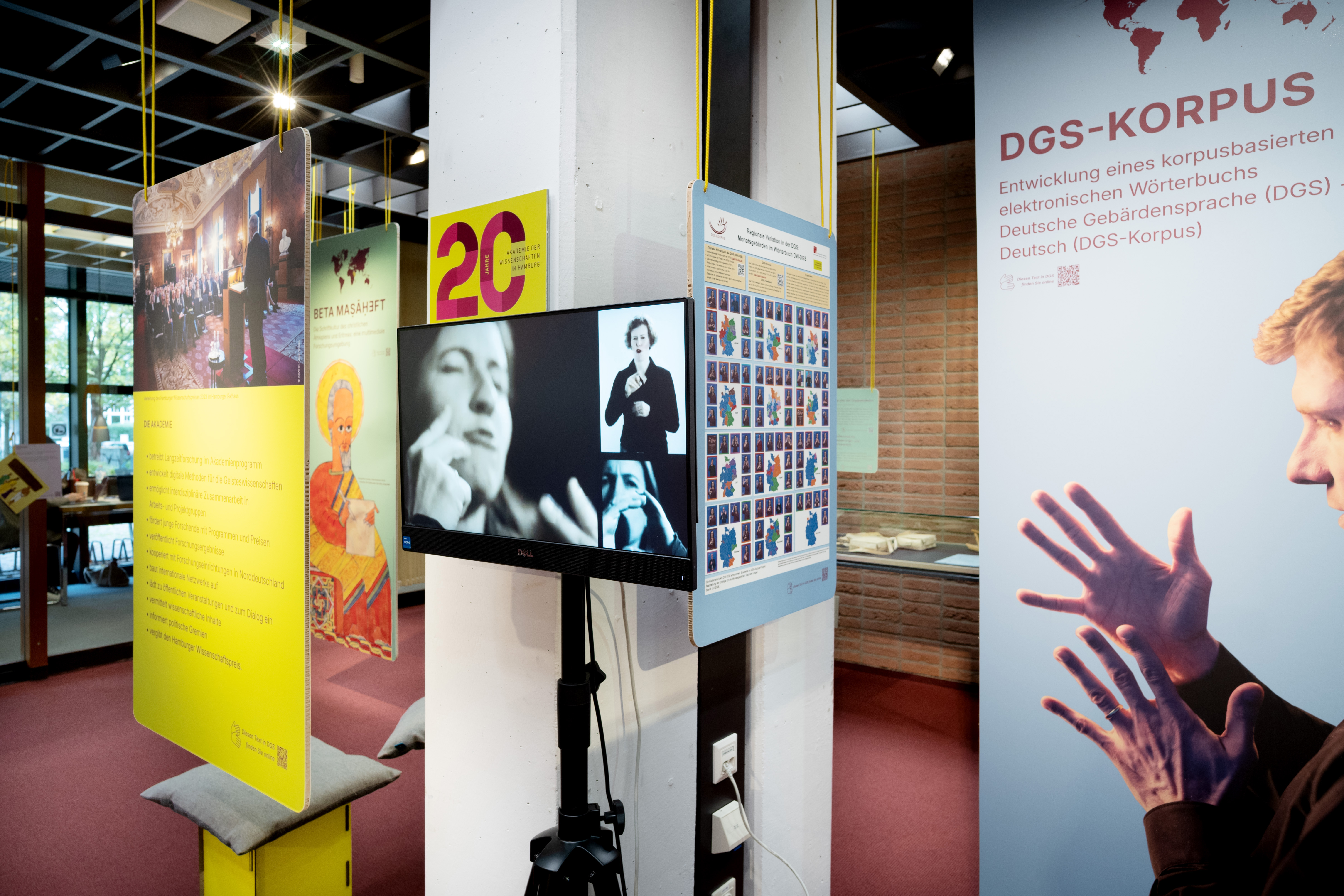
- DGS Corpus
- Etymologika
- Formulae – Litterae – Chartae
- INEL
- MiNGra
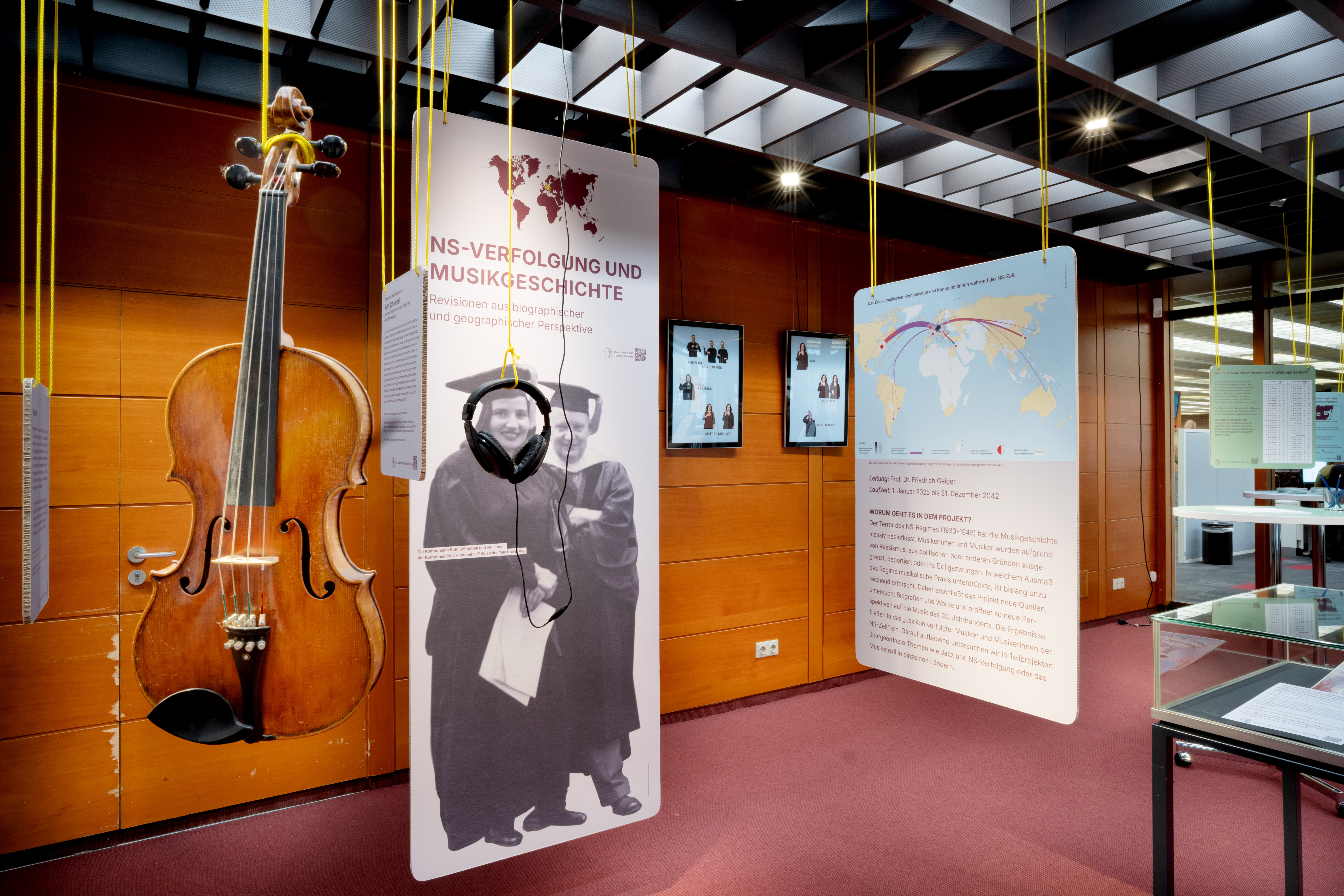
- Nazi Persecution and Music History
- Tamilex
- The Academies Programme
- The Academy of Sciences and Humanities in Hamburg
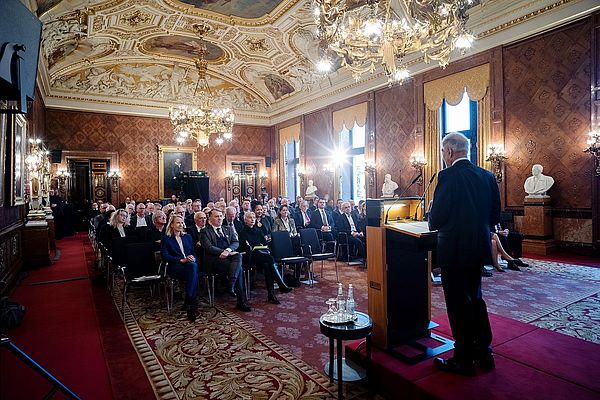
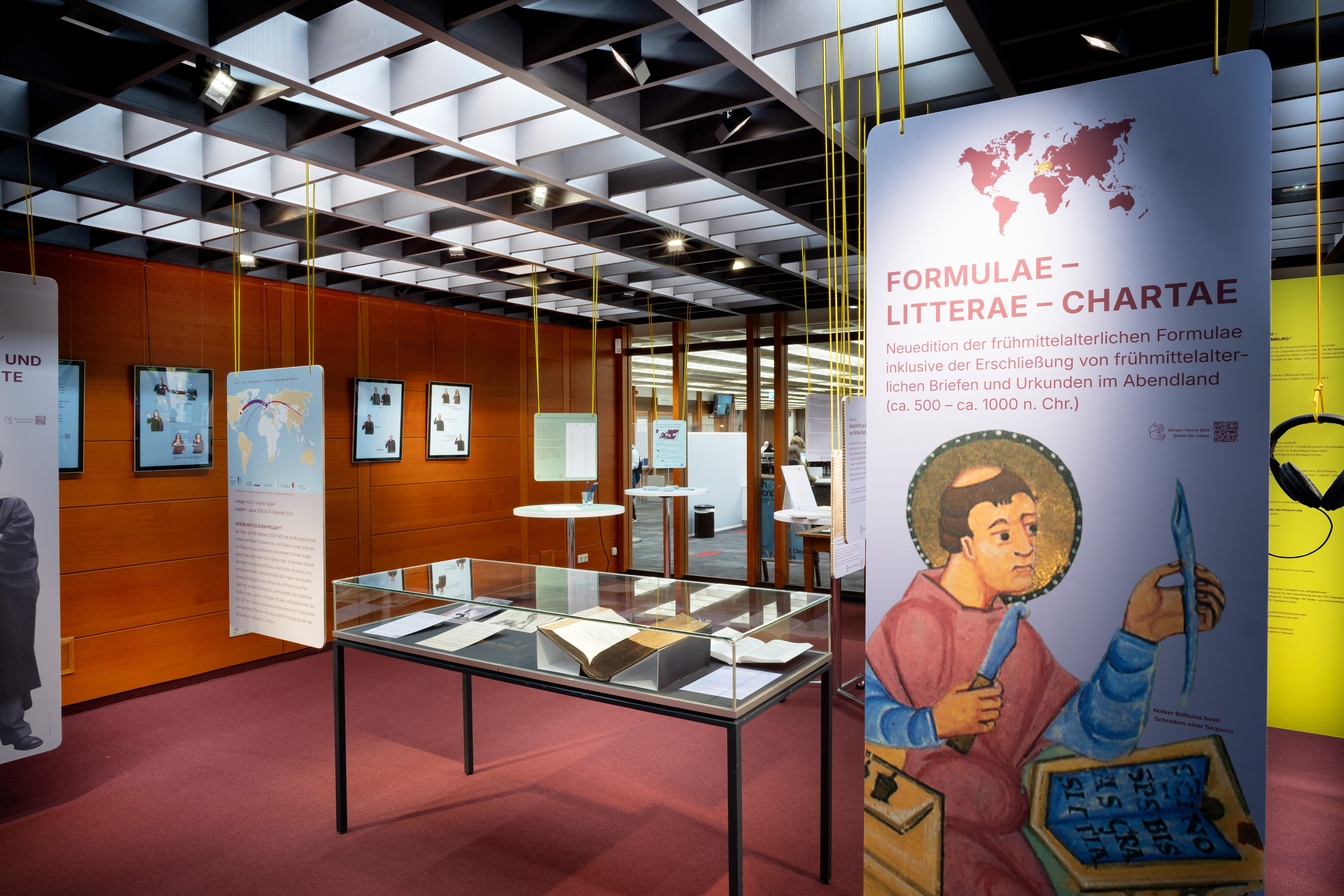
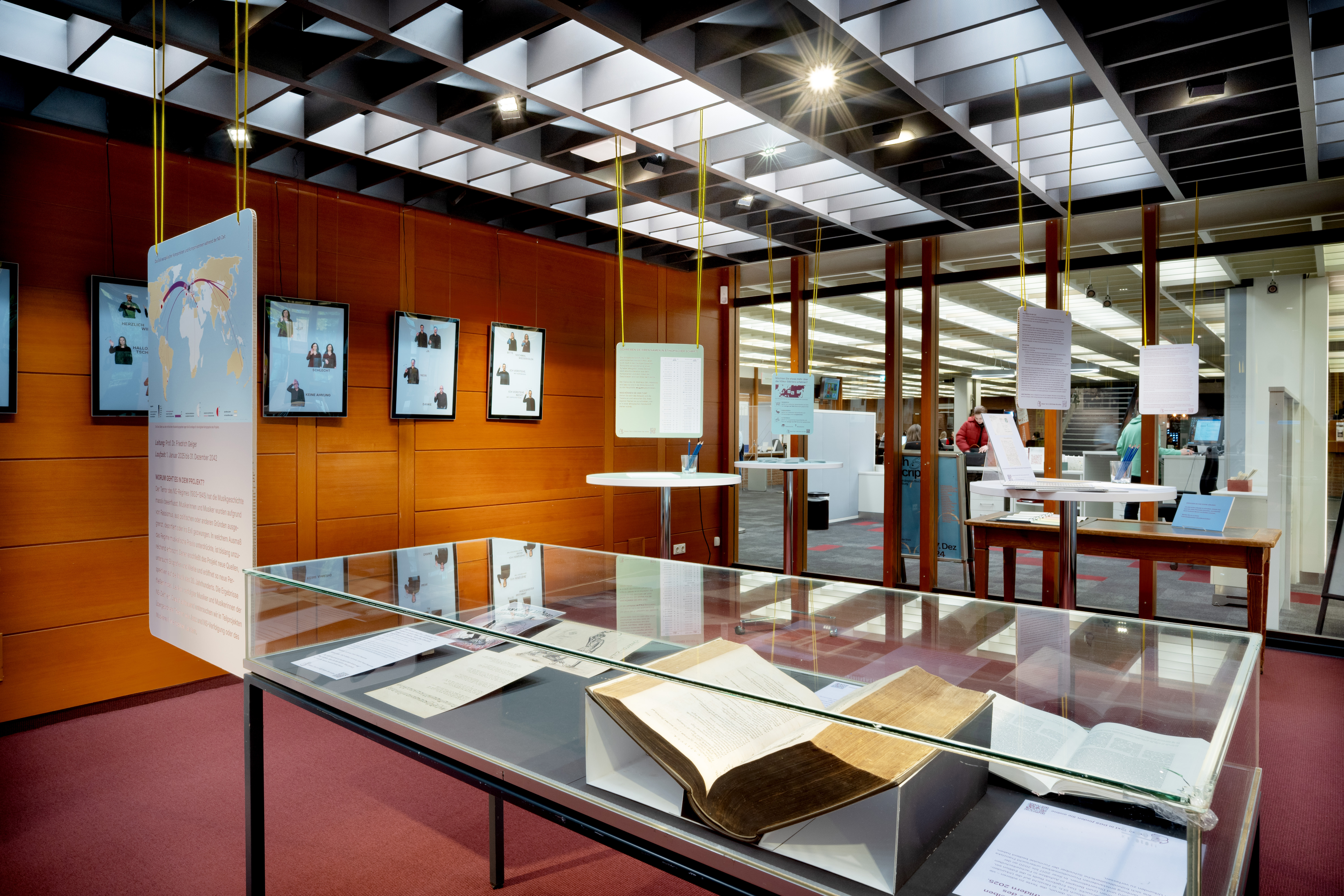
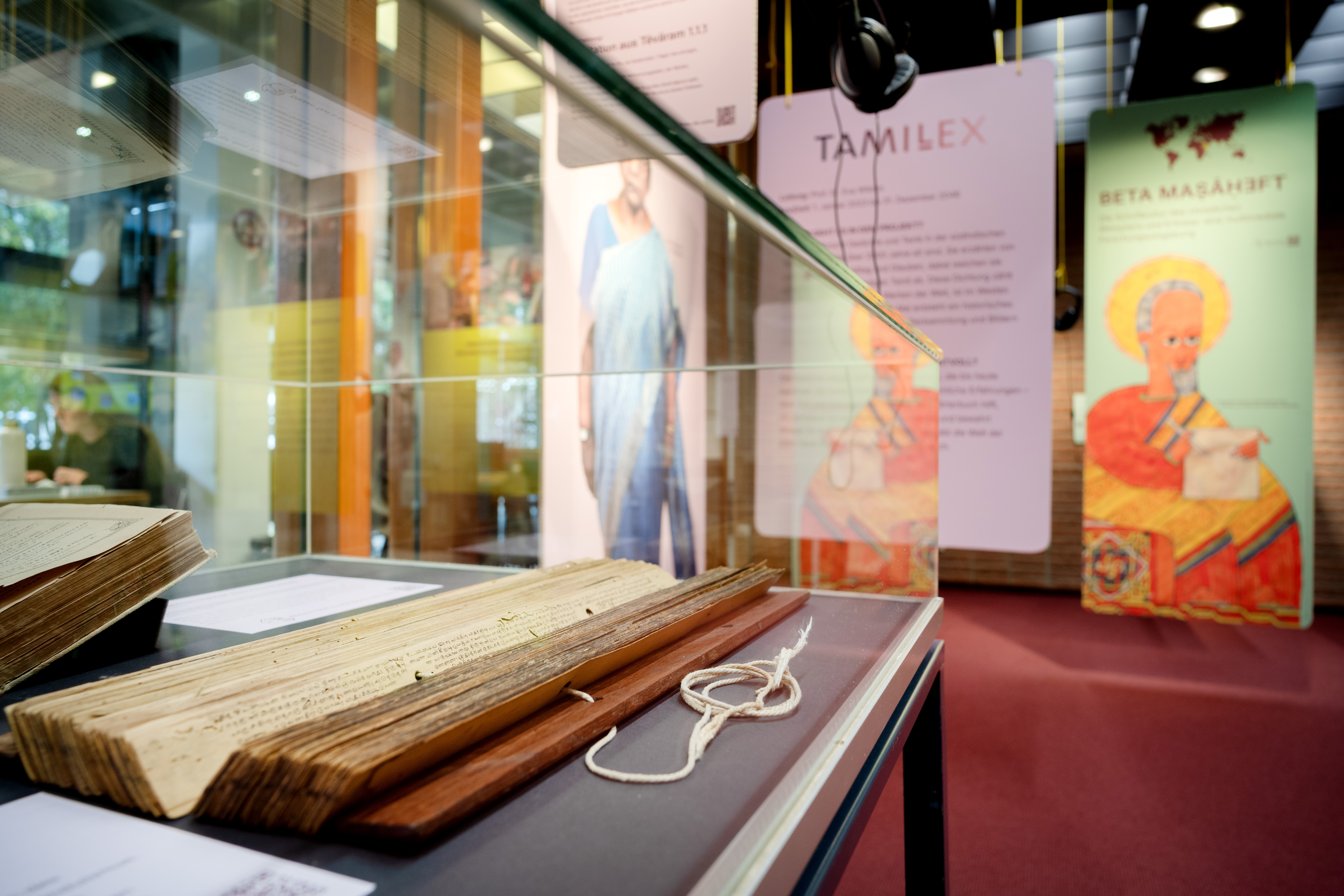
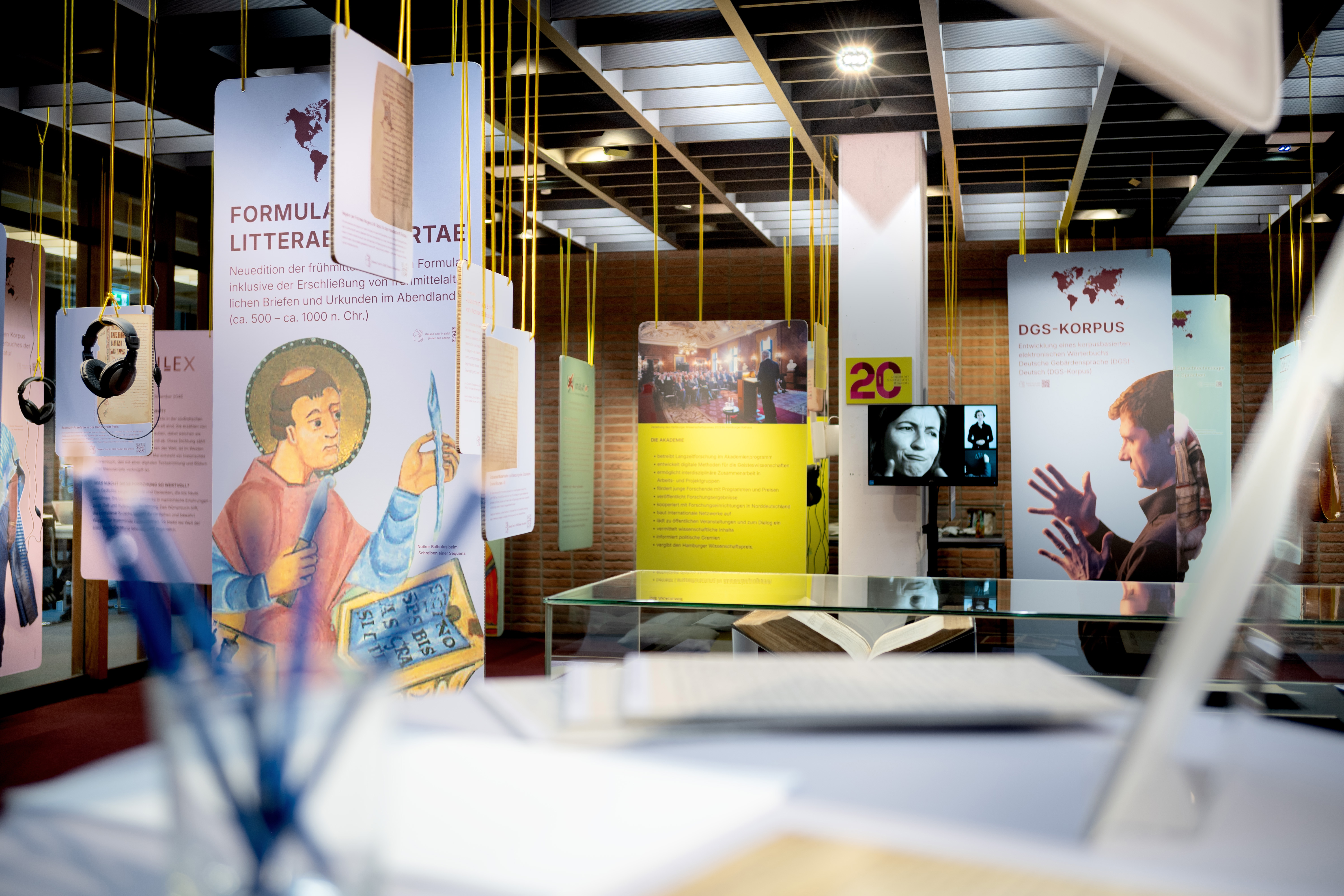
- Pictures Exhibition on Long-term research in Hamburg
Greifswald: Key data on the exhibition "Necessary, useful, new – Long-term research in Hamburg"
When? 2 November 2026 to 29 January 2027
Opening hours: The exhibition is open during the College’s public events, as well as on Tuesdays and Wednesdays from 2 pm to 6 pm. Individual visits can also be arranged by appointment.
Contact: Alfried Krupp Wissenschaftskolleg Greifswald
Telefon: +49 3834 420-5001 | E-Mail: info(at)wiko-greifswald.de
Where? Exhibition space at the Alfried Krupp Wissenschaftskolleg Greifswald, Martin-Luther-Straße 14, 17489 Greifswald
Admission is free.
DGS German Sign Language – the exhibition is suitable for deaf people.
The exhibition is being held in cooperation with the Alfried Krupp Wissenschaftskolleg Greifswald and is financed by the Free and Hanseatic City of Hamburg.
Past exhibitions
2025: Exhibition in Hamburg
When? 16 October to 15 December 2025
Opening hours: Monday to Friday 9:00 a.m. to midnight + Saturday and Sunday 10:00 a.m. to midnight; Opening: 16 October 2025, 12:30 p.m.
Where? Exhibition space at the Carl von Ossietzky State and University Library Hamburg, Von-Melle-Park 3, 20146
Admission is free.
DGS German Sign Language – the exhibition is suitable for deaf people.
The exhibition is being held in cooperation with the Hamburg State and University Library Carl von Ossietzky and is financed by the Free and Hanseatic City of Hamburg.
In the winter semester of 2025/2026, the anniversary exhibition ‘Necessary, useful, new – Long-term research in Hamburg’ will be accompanied by a lecture series on the seven Hamburg long-term research projects in the Academies' Programme, Germany's largest long-term research programme in the humanities and social sciences.
When? 23 October 2025, 27 November 2025, 4 and 11 December 2025, 15 January 2026, starting at 7 p.m.
Where? Lecture hall of the Hamburg State and University Library Carl von Ossietzky, Von-Melle-Park 3, 20146 Hamburg
2026: Exhibition in Bremen
When? 12 March to 20 June 2026
Opening hours: Monday to Friday 10.00 am to 7.00 pm + Saturday 10.00 am to 2.00 pm
Where? Exhibition space at the Haus der Wissenschaft Bremen, Sandstraße 4/5, 28195 Bremen
Admission is free.
DGS German Sign Language – the exhibition is suitable for deaf people.
The exhibition is being held in cooperation with the Haus der Wissenschaft Bremen and is financed by the Free and Hanseatic City of Hamburg.
What you will find here: about the landing page
Thank you for your interest in the Academy's exhibition on its long-term research projects.
Here you will find the motifs and texts in interview form for the individual exhibition stations. You will also find further information on the research projects.
The answers to key questions in long-term research are published on the German landing page for the exhibition, as provided by the individual projects in preparation for the exhibition in consultation with curator Tatjana Dübbel. These can be found under the tab ‘Questionnaire on the work of the project’ for each research project.
The exhibition was designed by Franka Frey.
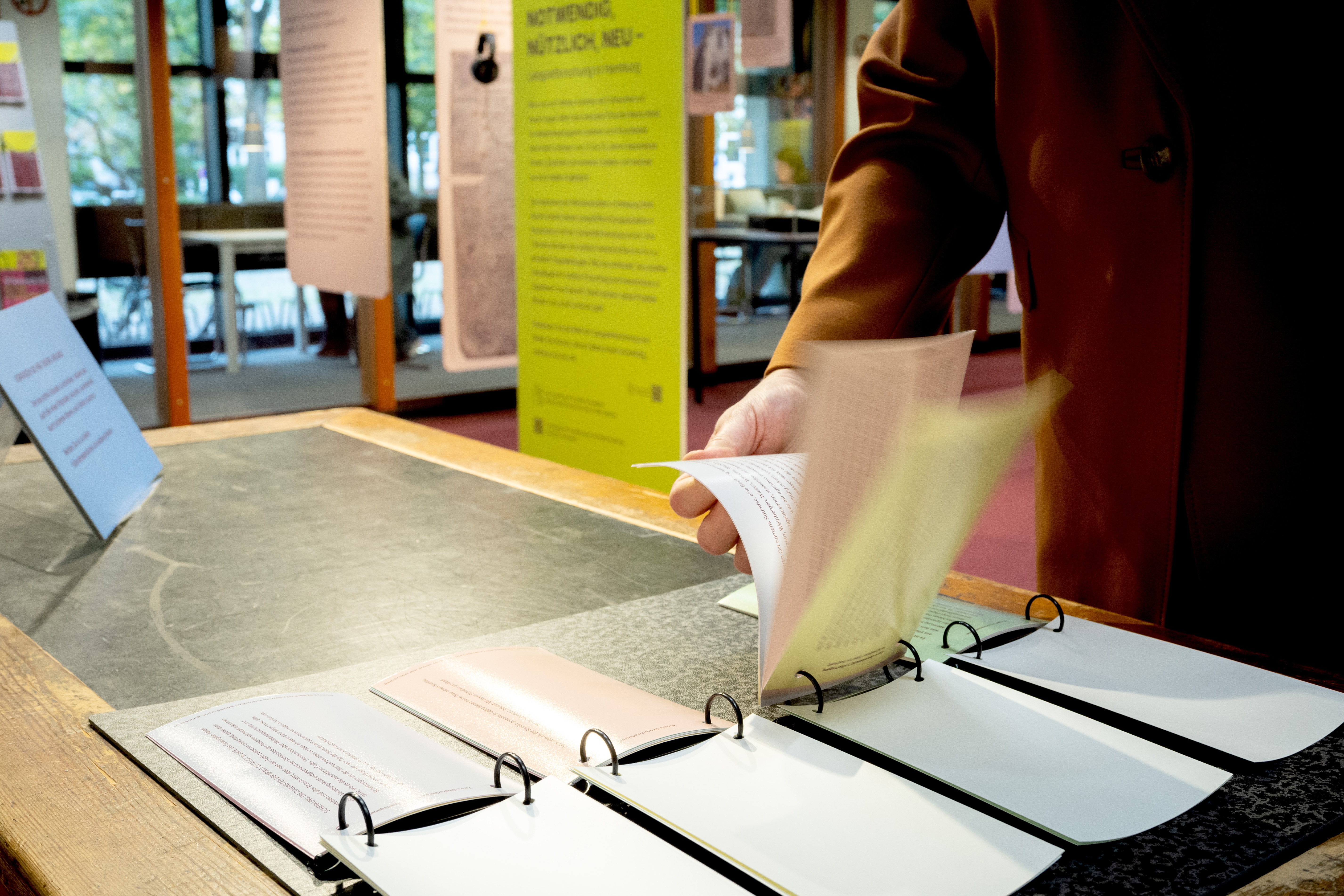
The solutions to the interactive station of the project ‘NS Persecution and Music History’ are available on the German-language landing page in the form of transcriptions and background information on the individual letters and the correspondence card.
Of course, this website cannot replace a visit to the exhibition. Take the opportunity to discover long-term research in a vivid, multimedia and interactive way.
The landing page is available in German.
Overview long-term research projects
• Tamilex is compiling the first historical Tamil dictionary.
• INEL is cataloguing materials from endangered indigenous North Eurasian languages and making them accessible to a wide audience.
• Formulae – Litterae – Chartae researches and edits early medieval formulae, i.e. model documents that serve as templates for deeds and letters and document the diversity of scholarly writing in early medieval Western Europe.
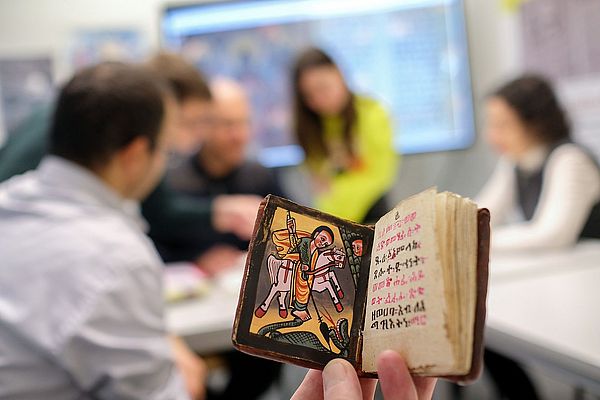
• Beta masaheft. The Written Culture of Christian Ethiopia and Eritrea systematically presents knowledge about this manuscript culture in a multimedia format.
• Etymologika is dedicated to Greek-Byzantine etymological dictionaries as significant lexicographical achievements in the history of ancient and medieval knowledge in Europe.
• DGS Corpus systematically records and documents German Sign Language (DGS) in all its living diversity. On this basis, an electronic dictionary is being created for everyone who uses, learns or researches DGS as a means of communication.
• NS Persecution and Music History researches the persecution of musicians by the Nazi regime and its global consequences. The aim is to revise and complete the historiography of 20th-century music. To this end, the online encyclopaedia of persecuted musicians of the Nazi era (LexM) is being expanded.
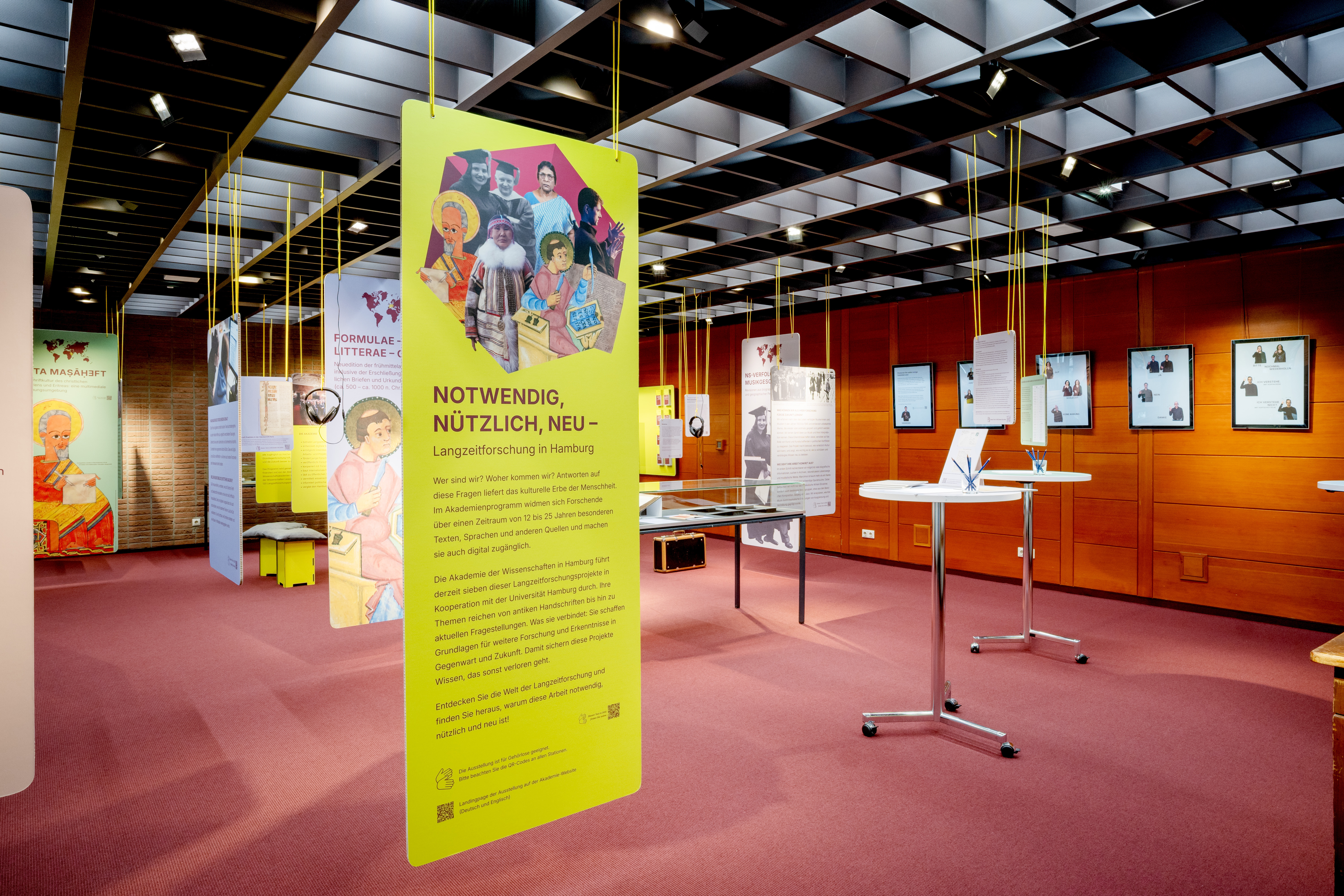
Introduction NECESSARY, USEFUL, NEW – Long-term research in Hamburg
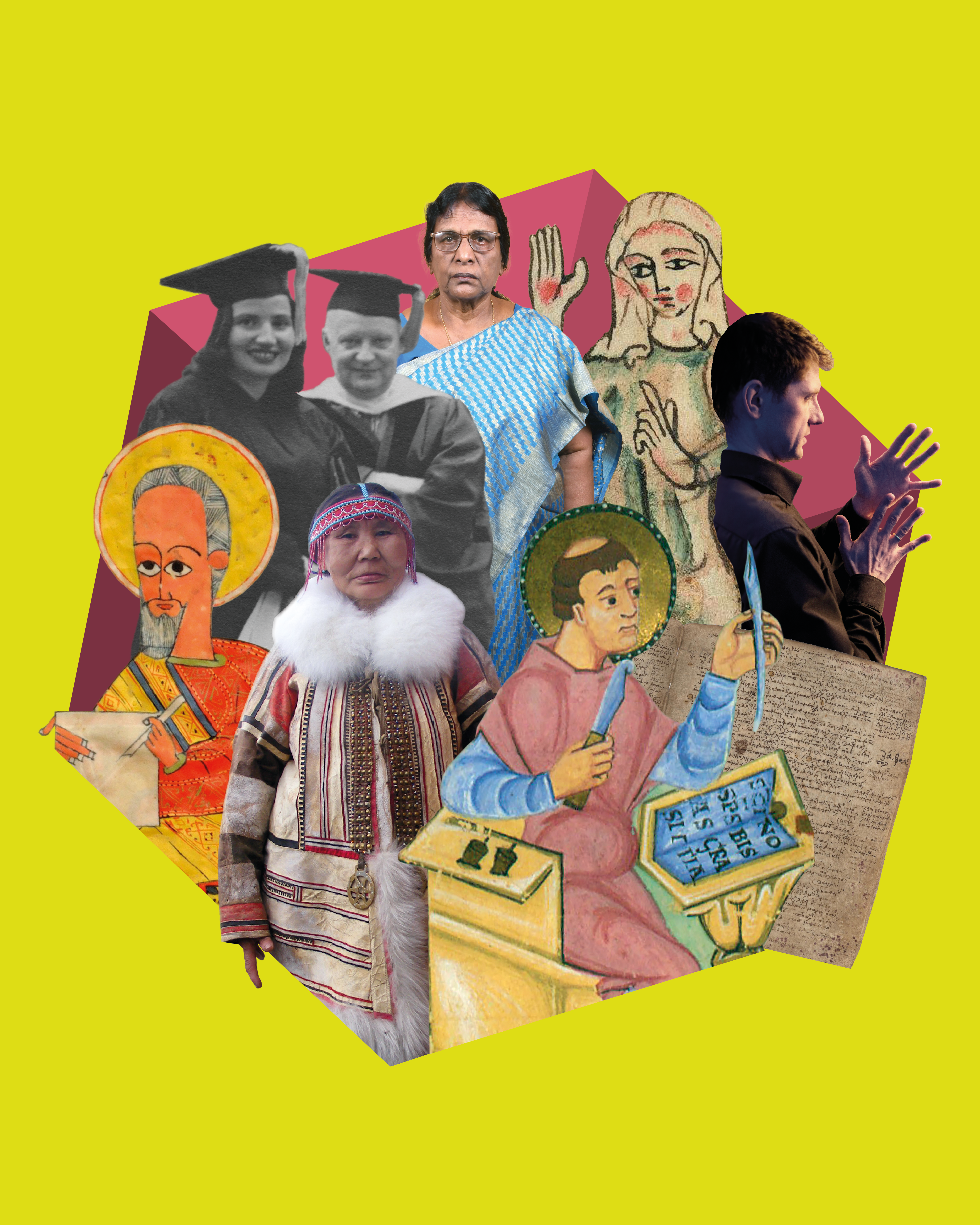
Who are we? Where do we come from? The cultural heritage of humanity provides answers to these questions. In the Academies' Programme, researchers devote themselves to specific texts, languages and other sources over a period of 12 to 25 years and make them digitally accessible.
The Academy of Sciences in Hamburg is currently conducting eight of these long-term research projects in cooperation with the University of Hamburg and the University of Music and Theatre Munich. Their topics range from ancient manuscripts to current issues. What they have in common is that they lay the foundations for further research and insights in the present and future. In this way, these projects preserve knowledge that would otherwise be lost.
Discover the world of long-term research and find out why this work is necessary, useful and innovative!
The exhibition is suitable for deaf visitors. Please note the QR codes at all stations.
Beta masaheft
Manuscripts of Ehtiopia and Eritrea

https://betamasaheft.eu/ESsdsm004
© Ethio-SPaRe
Direction: Prof. Dr. Alessandro Bausi and Eugenia Sokolinski M.A.
Duration: 1 February 2016 to 31 December 2040
WHAT IS THE PROJECT ABOUT?
Beta masaheft explores the written culture of Christian Ethiopia and Eritrea. Both countries profess Christianity as well as Islam, Judaism and ethnic religions. They have a tradition dating back thousands of years of recording knowledge in handwritten books. The project is developing an online portal that describes these valuable manuscripts and collects and links a wealth of information about the materiality of the objects, the texts they contain, their authors, the bookmakers and their places of origin.
WHAT MAKES THIS TOPIC SO SPECIAL?
In Ethiopia and Eritrea, texts are still handed down in handwritten form – a cultural technique that now exists almost exclusively here. Some pre-Christian and early Christian writings that would otherwise have been lost long ago have been preserved only in the church language Geʿez. The manuscripts reveal a rich, vibrant culture and provide unique insights into the history of the region – and thus also into our shared history.
WHAT MOTIVATES THE PROJECT PARTICIPANTS PERSONALLY?
The participants establish a connection to the people who wrote texts, produced parchment or copied books over the centuries. In this way, they discover a side of Ethiopia and Eritrea that is hardly visible in the media: a world of knowledge, art and creativity.
WHAT DOES THIS RESEARCH OFFER OTHERS?
For the first time, a digital interconnected repository on Christian book culture and literature in Ethiopia and Eritrea is being created. This is not only groundbreaking for Ethiopian studies and related subjects, but also benefits anyone interested in history and culture. Particularly important: researchers from Ethiopia and Eritrea are actively involved and thus contribute themselves to preserving their cultural heritage.
More information
Contact information
Project Beta masaheft
Hiob Ludolf Zentrum für Äthiopistik
Universität Hamburg
Alsterterrasse 1
20354 Hamburg
Germany
Contact
Eugenia Sokolinski, M.A.
email: eugenia.sokolinski(at)uni-hamburg.de
phone: +49 40 42838 7777
DGS Corpus
Development of a corpus-based electronic dictionary of German Sign Language

Direction: Annika Herrmann und Thomas Hanke
Duration: 1 January 2009 to 31 December 2027
WHAT IS THE PROJECT ABOUT?
German Sign Language (DGS) is a natural, visual language with its own grammar and regional variants. It is not international, but clearly differs from other sign languages. The project documents the diversity of DGS and is creating a digital dictionary that takes regional differences into account. The basis for this is a unique language archive: the DGS corpus, which contains over 560 hours of video recordings of deaf people from all over Germany. It is currently being supplemented by a second data collection phase filming the younger generation of people using DGS.
WHAT IS THE BIGGEST CHALLENGE IN THIS WORK?
In order to show the diversity of DGS, we need to recruit signers from all regions – and they must be willing to be filmed. The recordings are done with several cameras in a studio. The follow-up work is particularly time-consuming: viewing, selecting, translating, transcribing and assigning each individual sign to a basic form so that the data can be sustainably used by science and society in the long term.
WHY DOES THIS RESEARCH TAKE TIME?
Compiling the dictionary is complex and requires a great deal of expertise. The first phase of data collection took two years: conversations and personal accounts were recorded in natural DGS at 13 locations. From this, 560 hours were selected and carefully analysed. Each sign in the recordings is recorded individually and categorised. Around 50 hours are publicly available – translated, annotated and accessible to everyone.
WHAT CAN WE UNDERSTAND BETTER THROUGH THIS PROJECT?
The project promotes understanding of the grammar and structure of DGS and preserves the personal stories of deaf people – about school, work, family or special life events. This makes their perspective more visible and contributes to a better understanding of deaf culture.
More information
Contact information
DGS-Korpus project
Institute of German Sign Language and Communication of the Deaf (IDGS)
Universität Hamburg
Gorch-Fock-Wall 7
20354 Hamburg
email: info(at)dgs-korpus.de
Etymologika
Order and interpretation of knowledge in Greek and Byzantine lexica up into the Renaissance. Online edition with resources on manuscript production, user groups and cultural setting.

© 2025 Biblioteca Apostolica Vaticana
Direction: Prof. Dr. Christian Brockmann
Duration: 1 January 2020 to 31 December 2037
WHAT IS THE PROJECT ABOUT?
We are researching the Etymologicum Gudianum, an important Greek dictionary from the 11th century. It was compiled by Byzantine scholars in southern Italy and explains the origin and original meaning of words – the so-called étymon. The aim of our project is to make this important text accessible in a printed edition and in a modern online edition – with English translations, explanations and images of the original manuscripts.
WHAT IS SO SPECIAL ABOUT THIS DICTIONARY?
We are working with a real rarity: a working manuscript that comes directly from the medieval scriptorium of Byzantine scholars. This allows us to look over their shoulders as they work. Our goal is not only to make the dictionary digitally readable, but also to facilitate the understanding of the text. In this way, we are creating a solid foundation for researchers worldwide and for anyone interested in language, history and culture.
WHAT IS THE BIGGEST CHALLENGE FOR THE RESEARCHERS?
The original manuscript is old, partly damaged and difficult to decipher. We have to carefully compare it with later Greek manuscript copies. Another sticking point is that the dictionary contains entries from many different fields, ranging from medicine to mythology. This requires constant new research and the ability to communicate complex knowledge in an understandable form.
WHAT CAN WE UNDERSTAND BETTER THROUGH THIS WORK?
Our project shows how knowledge was collected and passed on in the Greek Middle Ages. The manuscript provides a direct insight into this process – from the study of the sources to the creation of the lexicon. The Etymologicum Gudianum clearly shows how alive and relevant etymological thinking can be until today – and what it reveals about our culture and history.
More information
Contact information
Project Etymologika
Institut für Griechische und Lateinische Philologie
Universität Hamburg
Von-Melle-Park 6
20146 Hamburg
Germany
Contact:
Prof. Dr. Christian Brockmann
email: etymologika(at)awhamburg.de
phone: +49 40 42838 2757
Formulae - Litterae - Chartae
New edition of the early medieval formulae with an exploration and analysis of early medieval letters and charters in western Europe (c. 500-c. 1000)

Direction: Prof. Dr. Philippe Depreux
Duration: 1 January 2017 to 31 December 2031
WHAT IS THE PROJECT ABOUT?
In the early Middle Ages, people used so-called formulae – text templates for documents or letters. These templates helped when writing legal or everyday documents. Most of them were not kept. This makes the few surviving pieces all the more valuable: they provide rare insights into the thinking and everyday life of over 1000 years ago. The project makes these texts accessible to scholars – digitally and in book form. This opens up new perspectives on legal, social, economic and cultural history.
WHAT MAKES THIS WORK PARTICULARLY EXCITING?
The Formulae reveal aspects of the Middle Ages that have hardly been seen in other sources to date. They tell of debts, requests for help and everyday conflicts. Most of what has been handed down from this period concerns the Church or the nobility. The texts, however, show how people of different origins and social ranks communicated – and make medieval life more tangible.
WHAT EXACTLY DO THE RESEARCHERS DO?
The research team transcribes the original texts word for word from the manuscripts, compares different versions, translates them from Latin and provides expert commentary. This results in a so-called critical edition. It is published digitally and as a book – so other researchers or interested parties can also work with it.
WHAT NEW INSIGHTS DOES THIS PROVIDE?
The Formulae help us understand how language, law and society developed and how written culture emerged. Thanks to the digital edition, it is also possible to trace how certain texts changed over time. This reveals how writers worked and how knowledge was passed on in the Middle Ages.
More information
Contact information
Project Formulae – Litterae – Chartae
Fakultät für Geisteswissenschaften, Fachbereich Geschichte
Universität Hamburg
Von-Melle-Park 6 #5
22297 Hamburg
Contact:
Dr. Horst Lößlein
Research Assistant
email: horst.loesslein(at)uni-hamburg.de
phone.: +49 40 42838 2690
INEL
Grammatical Descriptions, Corpora and Language Technology for Indigenous Northern Eurasian Languages

Direction: Prof. Dr. Beáta Wagner-Nagy
Duration: 1 January 2016 to 31 December 2033
WHAT IS THE PROJECT ABOUT?
Every language is an indispensable part of humanity's cultural diversity. It is not only a means of communication, but also a key to folk memory, traditions and ways of thinking. When a language dies, a significant part of this knowledge is lost. The INEL project is dedicated to a fascinating and urgent task: researching and documenting endangered languages of Siberia. Many of these languages are now only spoken by a few people – often the last speakers. Our work is therefore the last opportunity to collect language material, ask questions and gain insight into unique cultural worlds.
WHAT MAKES YOUR WORK SPECIAL?
The collaboration and encounters with the last speakers are both emotionally and scientifically significant, especially as many young people in Siberia are increasingly switching to Russian. In addition to field research, we also use historical documents that were recorded in past centuries. These valuable archive materials offer unparalleled insights into the languages and the world of the speaker communities of that time, which cannot otherwise be reconstructed.
WHAT EXACTLY DO YOU AND YOUR TEAM DO?
We collect language recordings and texts, transcribe, analyse and research them, and make them available in digital form.
Hier folgt eine Grafik (siehe PDF)
WHAT FINDINGS HAVE YOU MADE SO FAR?
By comparing languages, we can identify changes and influences that enrich our understanding of history and migration in the region. This expands our knowledge of the structure and function of languages and illustrates the interplay between language and culture. The INEL portal enables anyone interested to conduct their own research on Siberian languages. In addition, the speaker communities from which the data originates can use these resources. Digital processing and long-term storage make the languages visible and tangible – an important step, especially when a common language is no longer a matter of course.
More information
Contact information
Project INEL
Institut für Finnougristik/Uralistik (IFUU)
Universität Hamburg
Von-Melle-Park 6, Postfach #29
20146 Hamburg
Contact
Dr. Maria Brykina
email: inel(at)uni-hamburg.de
phone: +49 40 42838 6710
MiNGra
Middle Low German Grammar as a modern knowledge resource for research and teaching
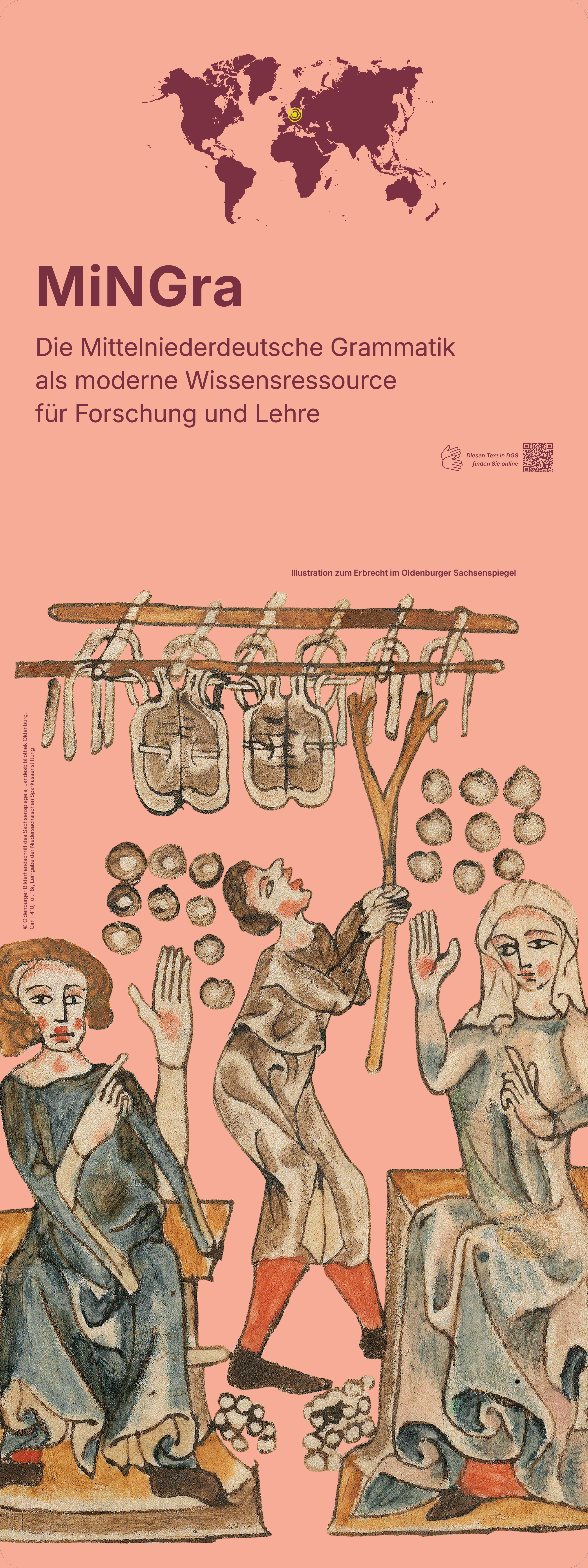
Direction: Prof. Dr. Ingrid Schröder, Prof. Dr. Sarah Ihden und Prof. Dr. Chris Biemann
Duration: 1 January 2026 to 31 December 2043
WHAT IS THE PROJECT ABOUT?
We are compiling a grammar of Middle Low German. To date, there has been no comprehensive scholarly grammar for this historical language stage that reflects the current state of research. Middle Low German was widely spoken from the 13th to the 17th century in the northern German-speaking region and the Baltic Sea region. It served as a language of trade in the Hanseatic settlements stretching from London via Bruges and Bergen to Novgorod. Middle Low German texts form the linguistic foundation of a diverse Hanseatic culture and play a central role in the cultural heritage of Northern Europe.
HOW WILL THE MIDDLE LOW GERMAN GRAMMAR BE OF HELP?
The Middle Low German grammar will, amongst other things, help to shed light on the diverse medieval textual culture of the Hanseatic region. Most importantly, it offers in-depth knowledge of the linguistic structures of Middle Low German, which is required, for example, for research into the history of language, comparative linguistics and linguistic typology.
WHAT IS THE BIGGEST CHALLENGE IN YOUR PROJECT?
The grammar will be based on the Reference Corpus Middle Low German/Low Rhenish, which comprises large amounts of linguistic data. Analysing this data, identifying patterns, and representing them appropriately is challenging, not least because we must keep the needs of the various target groups in mind and present our findings transparently. The grammar will be made available not only as a book, but most importantly via an interactive website. Here, users will be able to interact with the grammar, the associated text sources and research data via a search portal, and create their own quantitative visualisations of the results. To overcome these challenges, linguistics and computer science are working hand in hand within the project.
WHAT NEW PERSPECTIVES DOES YOUR WORK OPEN UP FOR OTHERS?
The Middle Low German Grammar is a multidimensional, web-based knowledge resource for research and teaching. It enables users to explore specific questions relating to particular phenomena and to carry out analyses. For historians, the grammar will serve as a tool for researching the urban, economic and religious history of Northern Europe.
Contact information
Project Low Middle German Grammar
Institut für Germanistik
Universität Hamburg
Von-Melle-Park 6, Postfach #15
20146 Hamburg
Hub of Computing & Data Science
Universität Hamburg
Albert-Einstein-Ring 8-10
22761 Hamburg
Contact:
Dr Nadine Wallmeier
e-mail: nadine.wallmeier(at)uni-hamburg.de
phone: +49 40 2395-28893
Nazi Persecution and Music History
Revisions from a biographical and geographical perspective

© Akademie der Künste Berlin
Direction: Prof. Dr. Friedrich Geiger
Duration: 1 January 2025 to 31 December 2042
WHAT IS THE PROJECT ABOUT?
The terror of the Nazi regime (1933–1945) had a massive impact on music history. Musicians were marginalised, deported or forced into exile on the basis of racism, political or other reasons. The extent to which the regime suppressed musical practice has not yet been adequately researched. The project therefore explores new sources, examines biographies and works, and thus opens up new perspectives on 20th-century music. The results are incorporated into the ‘Biographical Dictionary of Persecuted Musicians‘. Building on this, we are investigating overarching themes such as jazz and Nazi persecution or the exile of musicians in individual countries in sub-projects.
WHAT CAN WE LEARN FROM YOUR RESEARCH FOR THE FUTURE?
We are learning more about the lives of persecuted musicians between 1933 and 1945 and discovering unknown works that can be played and heard again for the first time. We are thus learning about ideas relating to music and its interpretation. These findings help us to respond more sensitively to the role of art and artists in political conflicts. The project raises awareness of how vulnerable culture can be and shows how important it is to protect it and revive suppressed knowledge.
WHAT DOES YOUR WORK LOOK LIKE IN PRACTICE?
In the first step, we research as much biographical information as possible, search archives, reconstruct life stories and musical works. Sometimes, little more than a name is known – then a laborious search for clues begins. In doing so, we look not only at the musical work of individuals, but also at specific professional groups, for example in the fields of composition, singing or jazz. We analyse how their music was shaped by traumatic experiences of exclusion and expulsion.
Contact information
Project Nazi Persecution and Music History
Institut für Historische Musikwissenschaft
Universität Hamburg
Edmund-Siemers-Allee 1
20146 Hamburg
Contact:
Dr. Sophie Fetthauer
email: sophie.fetthauer(at)uni-hamburg.de
phone: +49 40 42838 9539
Tamilex
Establishment of an electronic corpus of Classical Tamil literature and the corresponding historical lexicon informed by emic exegetical and lexicographical sources

Direction: Prof. Dr. Eva Wilden
Duration: 1 January 2023 to 31 December 2046
WHAT IS THE PROJECT ABOUT?
TAMILEX is researching poems and texts in the South Indian language Tamil, which are over 2000 years old. They tell of love, heroic deeds, everyday life and faith, but linguistically they differ greatly from modern Tamil. This poetry is among the oldest literary works in the world, but is hardly known in the West. For the first time, a historical dictionary is being created that is linked to a digital collection of texts and images of old manuscripts.
WHAT MAKES THIS RESEARCH SO VALUABLE?
The poems reveal feelings and thoughts that still resonate today. They offer deep insights into human experiences – across time and cultural boundaries. The dictionary helps to better understand the complex language and preserves knowledge for future generations. In this way, the world of ancient Tamil poetry remains alive and accessible.
HOW DOES MODERN TECHNOLOGY HELP?
For example, we use UV or infrared light to make faded letters in damaged manuscripts visible again – characters that are barely recognisable to the naked eye. The project is also experimenting with AI-supported deciphering of handwriting to speed up the evaluation process. This makes texts easier to research and digitally preserve so that they become accessible worldwide.
WHAT NEW PERSPECTIVES ARE EMERGING?
The language of ancient Tamil poetry has changed over time. The dictionary shows when and how certain words were used and how their meanings changed. All terms are directly linked to text passages, which in turn lead to the original manuscript images. This allows language to be traced directly back to its historical sources – a window into the past that is available to everyone.
More information
Project film with German Sign Language Synchronisation
Portrait of the Tamilex Long-term project in Tamil with film footage from the Deutsche Welle team in summer 2023
University of Hamburg press release of 9 December 2022 on the project launch:
"Eleven million euros in funding. The first historical Tamil dictionary is being created at the University of Hamburg"
Contact information
Project Tamilex
Abteilung für Kultur und Geschichte Indiens und Tibets
Universität Hamburg
Alsterterasse 1
20354 Hamburg
Contact:
Prof. Dr. Eva Wilden
email: eva-wilden(at)uni-hamburg.de
phone: +49 40 42838 6269
The Academies Programme
Exploring and preserving cultural heritage
For over 40 years, researchers in the Academies Programme have been exploring key texts, languages and traditions. The aim is to document and preserve cultural heritage and make it accessible to everyone, both nationally and internationally. This basic research helps us to understand the past and shape the future.
The programme is jointly funded by the federal and state governments and coordinated by the Academies' Union. Eight science academies and the German National Academy of Sciences Leopoldina are currently carrying out over 120 long-term research projects.
The long-term research projects develop encyclopaedias and dictionaries, editions and digital platforms, among other things. They are equally accessible to the scientific community and the general public. In this way, the projects make historical knowledge tangible in the present and future.
With its long-term orientation, the Academies' Programme is unique worldwide and contributes to the cross-border exploration and preservation of humanity's cultural heritage through international cooperation.
FIGURES 2025:
• 127 projects
• over 900 employees
• 20 dictionaries
• 104 editions
The Academy of Sciences and Humanities in Hamburg
The Academy of Sciences and Humanities in Hamburg was founded in 2005.
Under the motto ‘Connecting Sciences,’
• the Academy promotes exchange between different scientific disciplines and dialogue between science, politics, and society
• the Academy makes a significant contribution to informing the public about scientific findings
• the Academy offers guidance in fast-moving times
• the Academy provides impetus that extends far beyond northern Germany.
The Academy comprises around 150 leading scientists and approximately 20 distinguished Young Academy Fellows from the scientific region of Northern Germany. Its catchment area includes Bremen, Hamburg, Mecklenburg-Western Pomerania and Schleswig-Holstein. The Academy's basic budget is financed by the Free and Hanseatic City of Hamburg.
THE ACADEMY
• conducts long-term research in the Academies' Programme
• develops digital methods for the humanities
• facilitates interdisciplinary collaboration in working and project groups
• supports young researchers with programmes and awards
• publishes research results
• cooperates with research institutions in northern Germany
• builds international networks
• invites the public to events and dialogue
• communicates scientific content
• informs political bodies
• awards the Hamburg Science Prize.